 Labelly
Ingredients List Order and What It Reveals
Understanding why ingredients are listed in a specific order, how to identify components, and what ingredient ordering reveals about product composition.
The Fundamental Rule: Descending Order by Weight
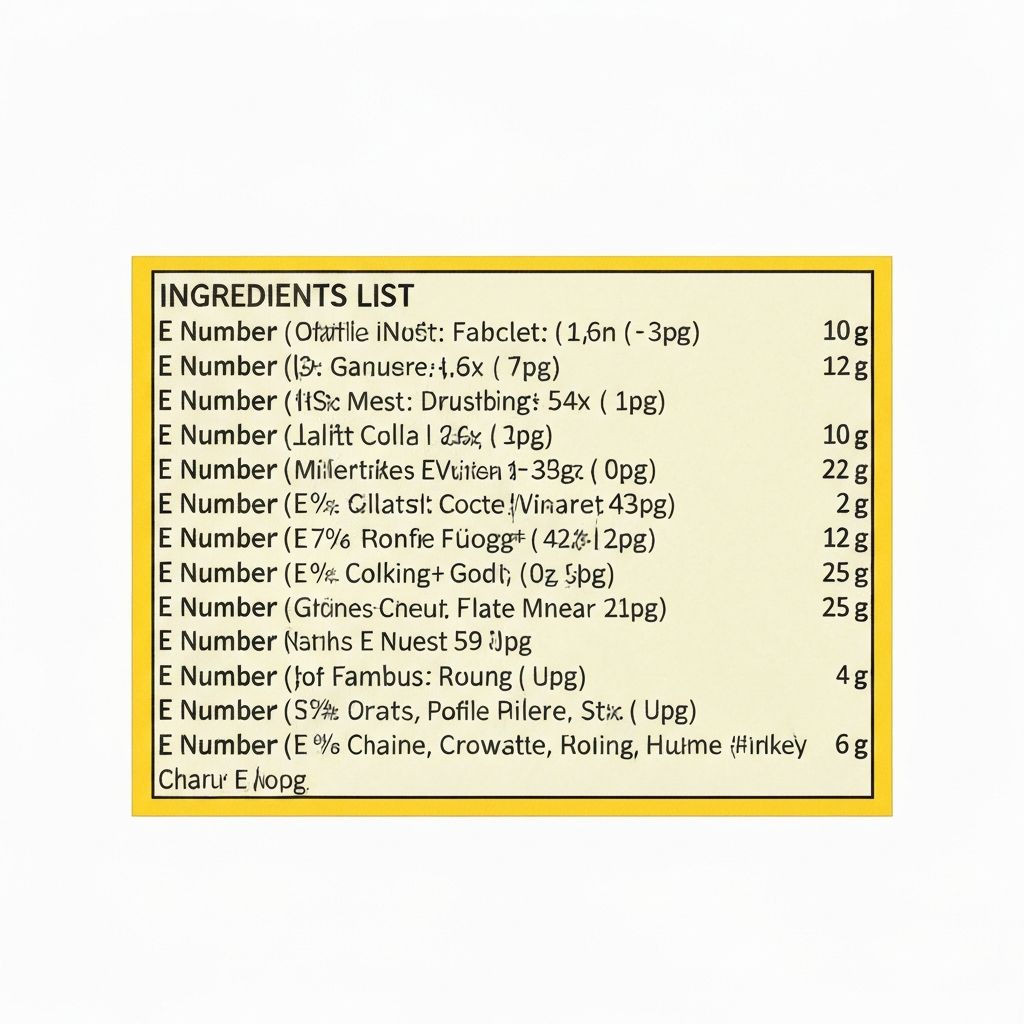
All ingredients on food packaging must be listed in descending order by weight at the time of manufacture. The ingredient present in the greatest amount appears first in the list. The ingredient present in the smallest amount appears last. This ordering principle applies to all ingredients and additives without exception.
For example, if a cereal contains 30% wheat, 25% sugar, 20% oats, and 10% oil, those would appear in that order on the ingredients list. The ordering provides transparent information about the relative proportions of ingredients in the product.
What This Ordering Tells You About a Product
Because ingredients are listed by weight, the ingredients list provides insight into what makes up the product composition. The first few ingredients represent the primary components. If water is listed first, water is the primary ingredient by weight. If sugar appears early in the list, sugar is a major component. Reading the first few ingredients provides quick insight into what the product is primarily composed of.
The Difference Between Ingredient Weight and Ingredient Presence
The weight-based ordering can be surprising because it differs from importance or concentration in the final taste experience. For example, salt might be one of the final ingredients despite having a prominent salty taste because very small amounts of salt are needed to achieve saltiness. Similarly, flavourings might appear last despite having a noticeable flavour impact. The position does not reflect importance of flavour but only weight.
Identifying Additives: E Numbers and Other Additives
Additives such as preservatives, colourings, emulsifiers, and thickening agents must be declared on the ingredients list. These are often identified by E numbers (E-numbered codes from the European approved additives list), though some may be declared by their common or scientific names. Examples include:
- E300-E307: Antioxidants
- E200-E299: Preservatives
- E400-E499: Thickening agents, gelling agents, stabilisers
- E100-E199: Colourings
All E number additives have undergone safety assessment and must meet stringent requirements before approval. The E number system provides a standardised method for identifying approved additives consistently across countries.
Allergen Identification on Ingredients Lists
Ingredients lists must clearly identify major allergens such as milk, eggs, peanuts, tree nuts, fish, shellfish, soya, and gluten. Allergens are typically highlighted in bold or with some visual distinction to aid quick identification. Some labels also include a separate "Contains:" statement highlighting allergens present. For individuals with allergies or intolerances, the ingredients list is essential for product suitability assessment.
Sub-Ingredients and Compound Ingredients
For some ingredients called compound ingredients, the sub-ingredients (ingredients within the ingredient) may be listed separately in parentheses. For example, "chocolate (cocoa solids, cocoa butter, sugar)" shows the components of the chocolate ingredient. Not all sub-ingredients must be listed; only certain compound ingredients require this level of detail. This varies by regulation and ingredient type.
Percentage Declarations
For some ingredient categories, manufacturers must declare the percentage of that ingredient in the product. For example, if chocolate is a featured ingredient, the percentage of cocoa solids must be declared. For meat products, the meat content percentage must be shown. These declarations are required for prominent ingredients to provide transparency about content levels.
Generic vs Specific Ingredient Names
Some ingredients can be listed using generic terms while others require specific names. For example, "vegetable oil" can list multiple types of oils without naming each specifically. However, "peanut oil" must specify peanuts due to allergen requirements. The level of specificity varies by regulation and ingredient category. More specific naming is required for allergens and certain other ingredients.
Water Content and Water as an Ingredient
Water used in manufacturing but not present in the final product (such as water used in cooking) does not need to be declared. However, water present in the final product must be included in the ingredients list and is counted in the weight ordering. This is why water often appears high in the ingredients lists of many products despite not being an obvious ingredient.
Processing Aids and Non-Ingredient Components
Some substances used during manufacturing but not present in the final product (processing aids) do not need to be declared on the ingredients list. These are distinct from ingredients because they are removed or inactivated during processing. Only substances present in the final product must be listed.
Explore other labelling concepts
Discover additional detailed guides about UK food labelling systems and nutrition information presentation.
View all labelling explorations →