 Labelly
Understanding UK Food Labelling and Nutrient Information
An educational exploration of nutrition panel elements, traffic light systems, and label information presentation standards in the United Kingdom.
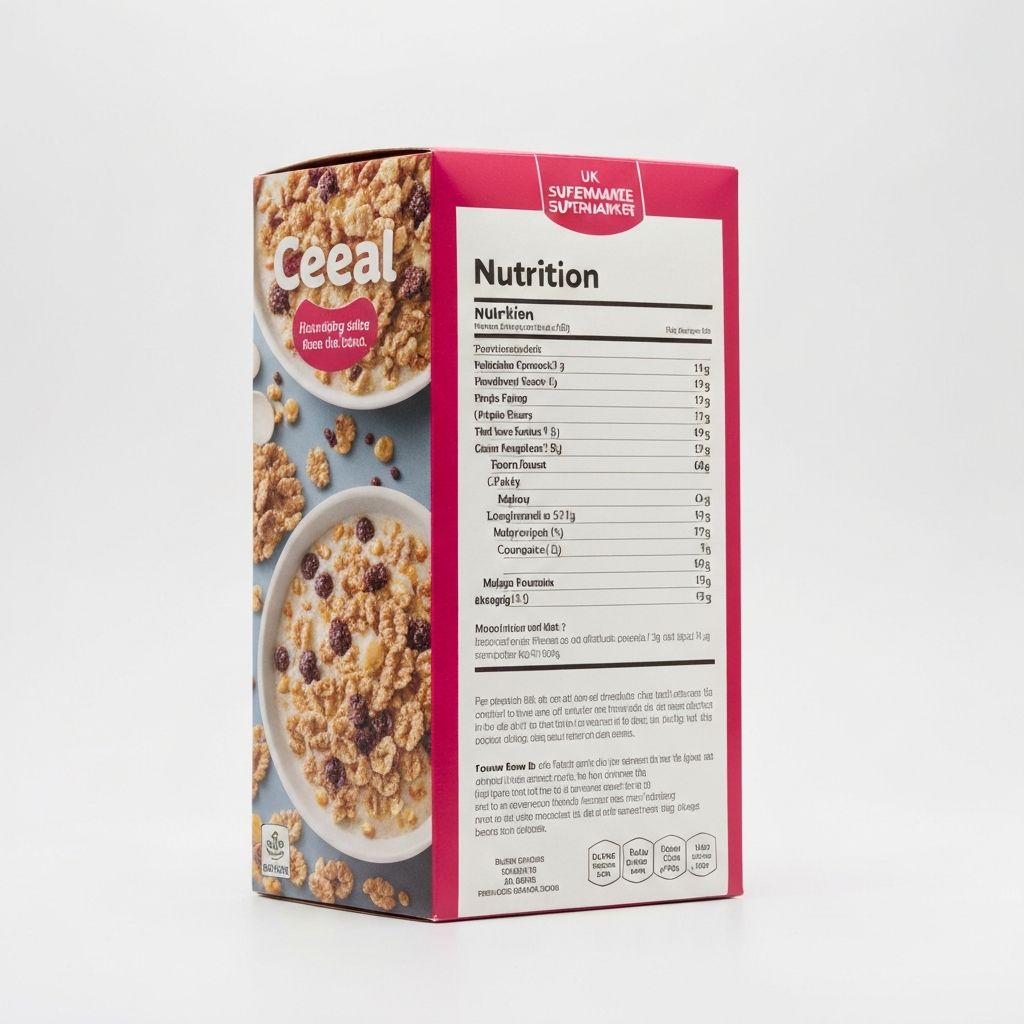
Mandatory Nutrition Panel Explained
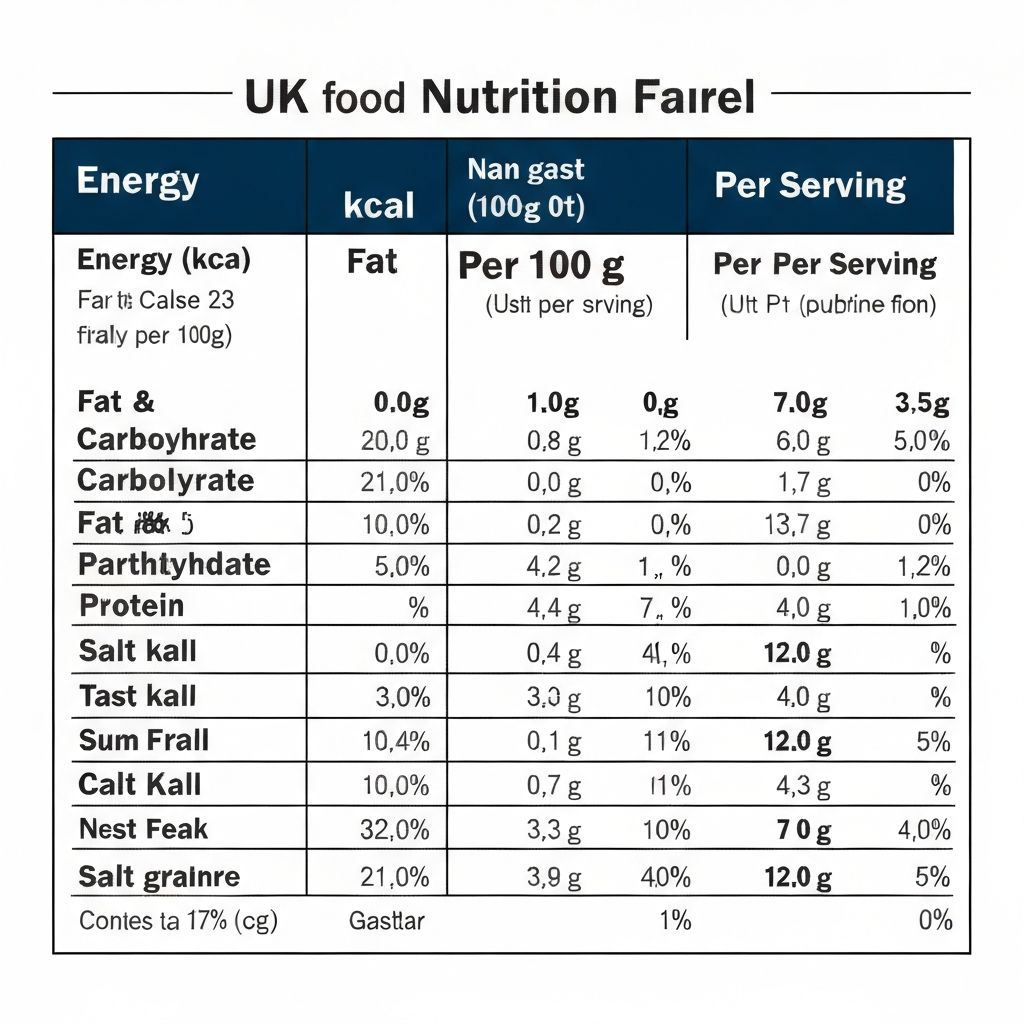
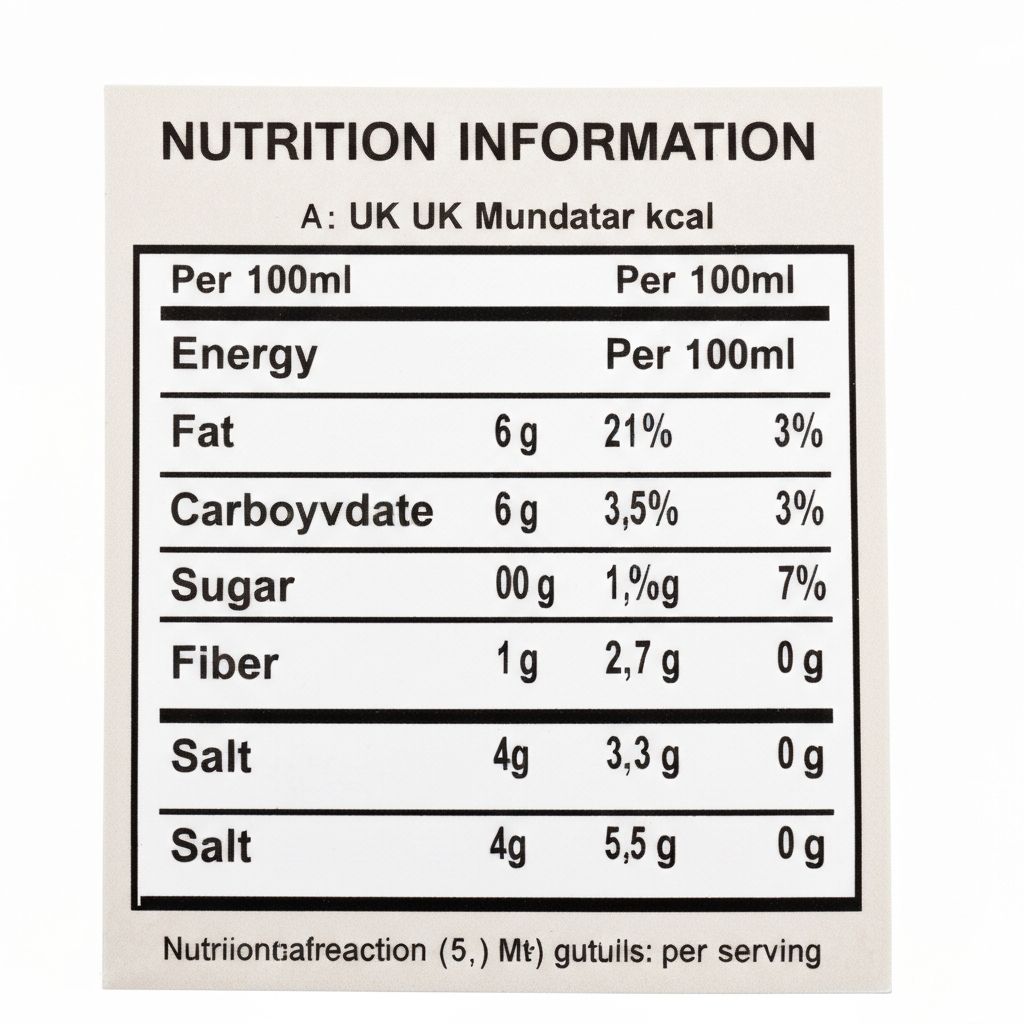
UK and EU food labelling regulations require manufacturers to display nutritional information per 100 grams or millilitres, and per portion where the serving size is clearly declared. The mandatory nutrition panel contains energy values in both kilojoules (kJ) and kilocalories (kcal), along with macronutrients: total fat, saturated fatty acids, carbohydrate, total sugars, fibre, protein, and salt.
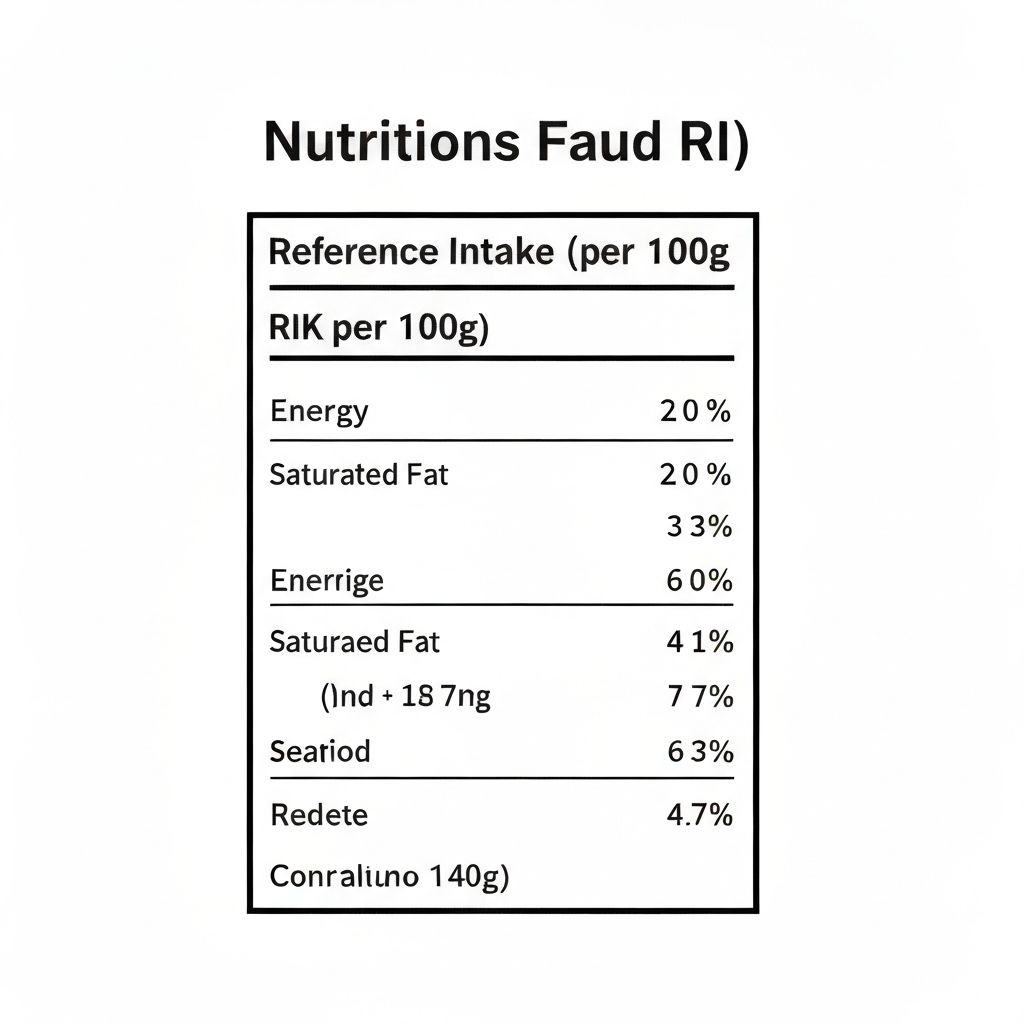
Reference Intake (RI) Percentages
Reference Intake percentages on UK food labels indicate how much of an average adult's daily recommended intake a single serving provides for energy and key nutrients. These percentage values are calculated based on standardised reference values set by food labelling regulations. The RI system allows consumers to compare products using a consistent baseline, though individual daily needs vary by age, activity level, and health status.
Front-of-Pack Traffic Light System
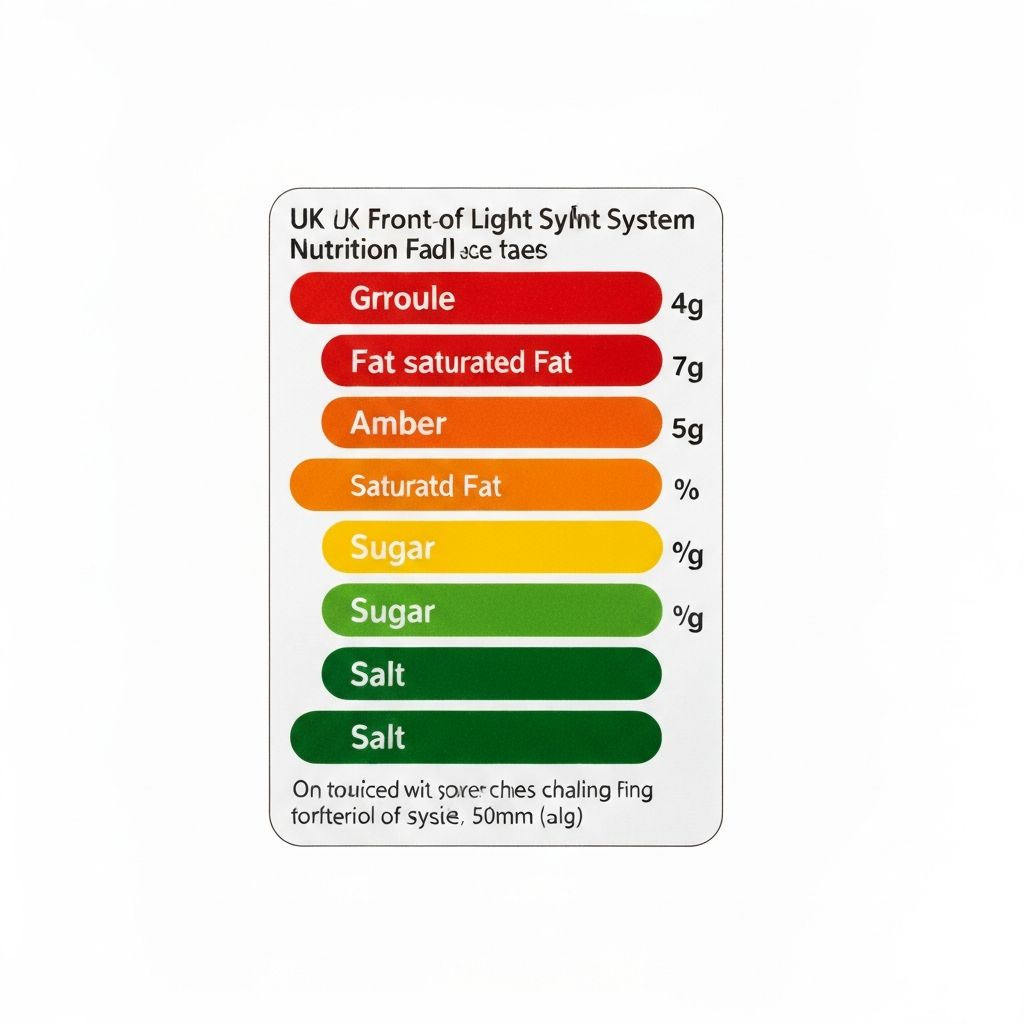
The UK front-of-pack traffic light label uses colour coding to indicate nutrient levels per 100 grams: red for high levels, amber for medium levels, and green for low levels. The colour thresholds apply to fat, saturated fatty acids, sugars, and salt. This visual system allows quick product comparison at point of purchase, though the colours themselves communicate only whether nutrient levels are high, medium, or low relative to standardised thresholds.
Ingredients List Rules
Ingredients must be listed in descending order by weight at the time of manufacture. Common additives include preservatives, colourings, emulsifiers, and thickening agents, often identified by E numbers (European Union additive codes). The ingredients list provides transparency about product composition and helps identify allergens and specific components.
Legal Definitions of Label Claims
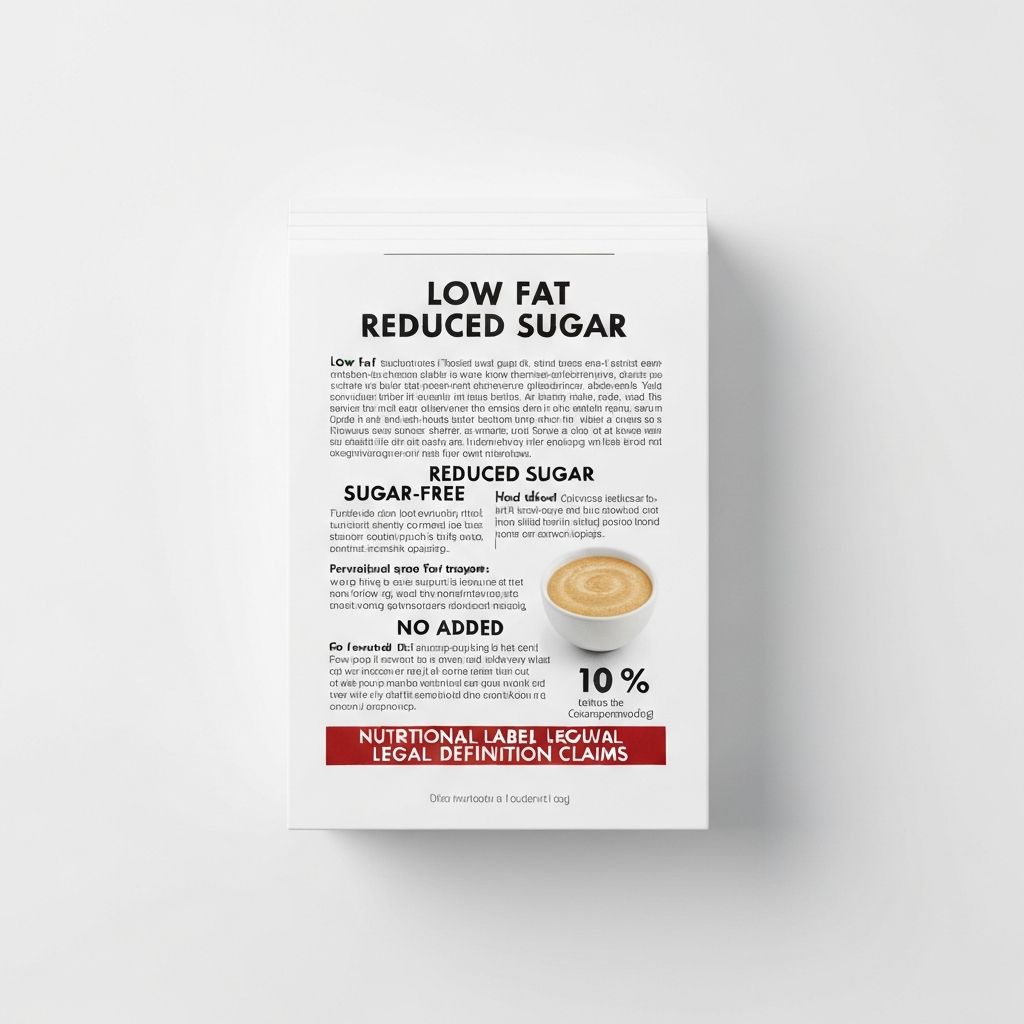
Claims on food labels such as low fat, light, reduced sugar, no added sugar, high fibre, and source of protein are defined by UK and EU food labelling regulations. For example, low fat requires the product to contain no more than 3 grams of fat per 100 grams (or 1.5 grams per 100 millilitres for liquids). Light or lite means at least 30 percent less energy than a comparable product. These definitions ensure consistent interpretation across products and manufacturers.
Per 100 g vs Per Portion Comparison
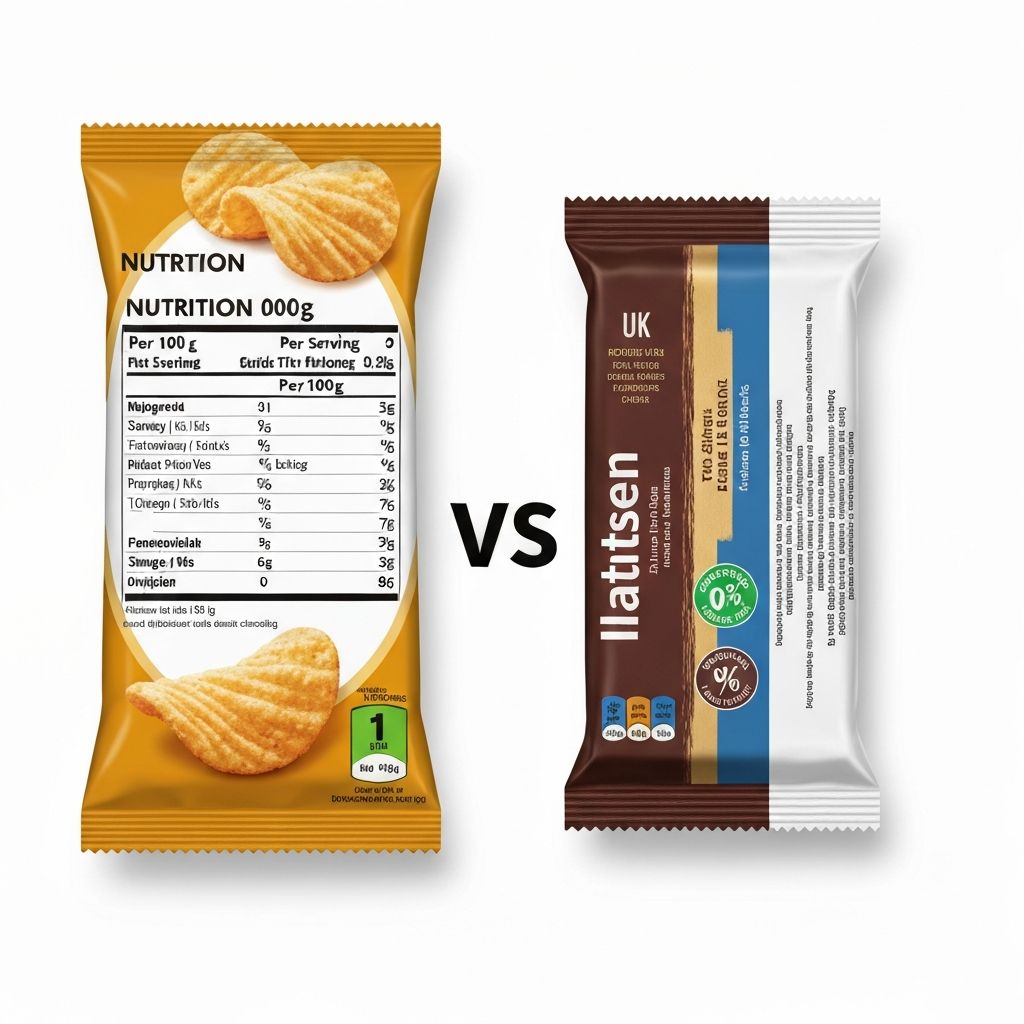
Nutrition information presented per 100 grams allows direct product comparison using consistent units, whereas per-portion values depend on manufacturer-declared serving sizes. Because portion declarations vary between brands, comparing products by their per 100 gram values provides a standardised approach to evaluating nutrient density and composition differences.
Common Portion Size Practices
UK manufacturers declare portion sizes based on their intended serving recommendations. These vary widely across product categories and brands. Portion declarations are subjective and may not reflect actual consumption patterns. Understanding the difference between declared portion size and actual consumption helps contextualise the per-portion nutrition values shown on labels.
Processing and Label Presentation
Food processing can alter nutrient profiles and how information is presented on labels. The declared nutrition panel reflects the product as sold, not as consumed after home preparation. For example, some products show values for the prepared (cooked) product rather than the dry product, and this is indicated on the label. Understanding the basis for the declared values provides context for interpreting the nutrition information.
Detailed Label Breakdowns
Explore in-depth explanations of how to interpret specific elements of UK food labels. Each article below provides detailed information on core labelling concepts and practical guidance on understanding label information.
Decoding the Mandatory UK Nutrition Information Panel
Detailed breakdown of energy, macronutrients, salt, and how to read all mandatory elements on UK food labels.
Learn more about →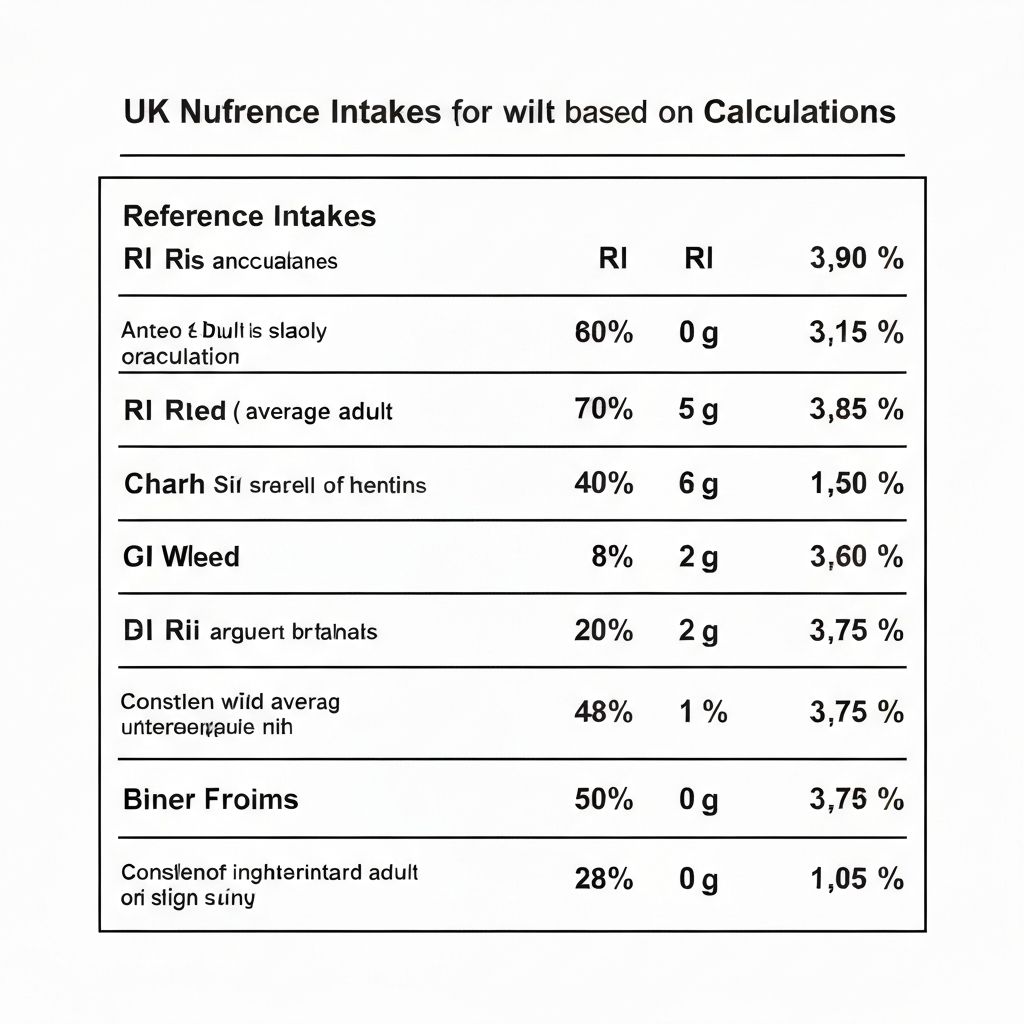
How Reference Intake Percentages Are Calculated
Understanding RI values for different nutrients and how they are determined for an average adult consumer.
Learn more about →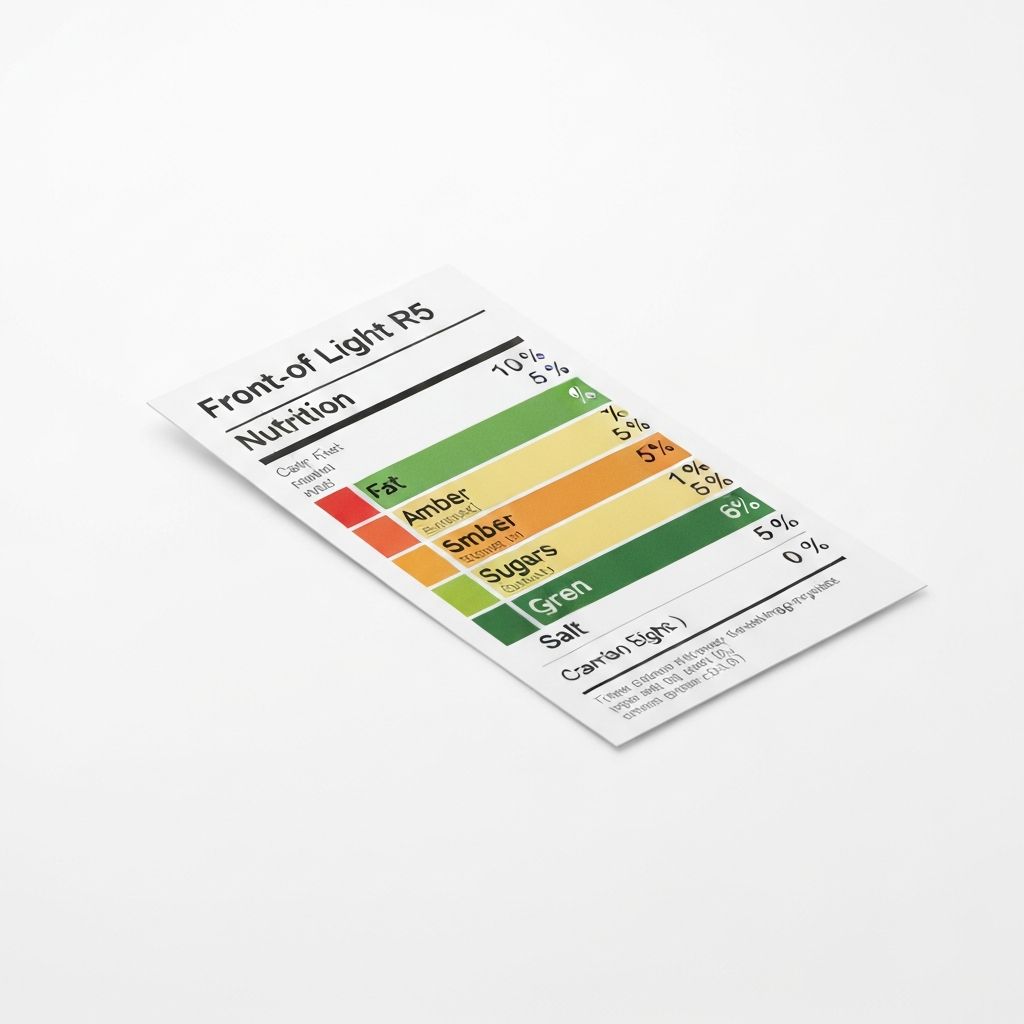
Understanding the Traffic Light Front-of-Pack System
How colour coding works, what red, amber, and green indicate, and how to use traffic lights for product comparison.
Learn more about →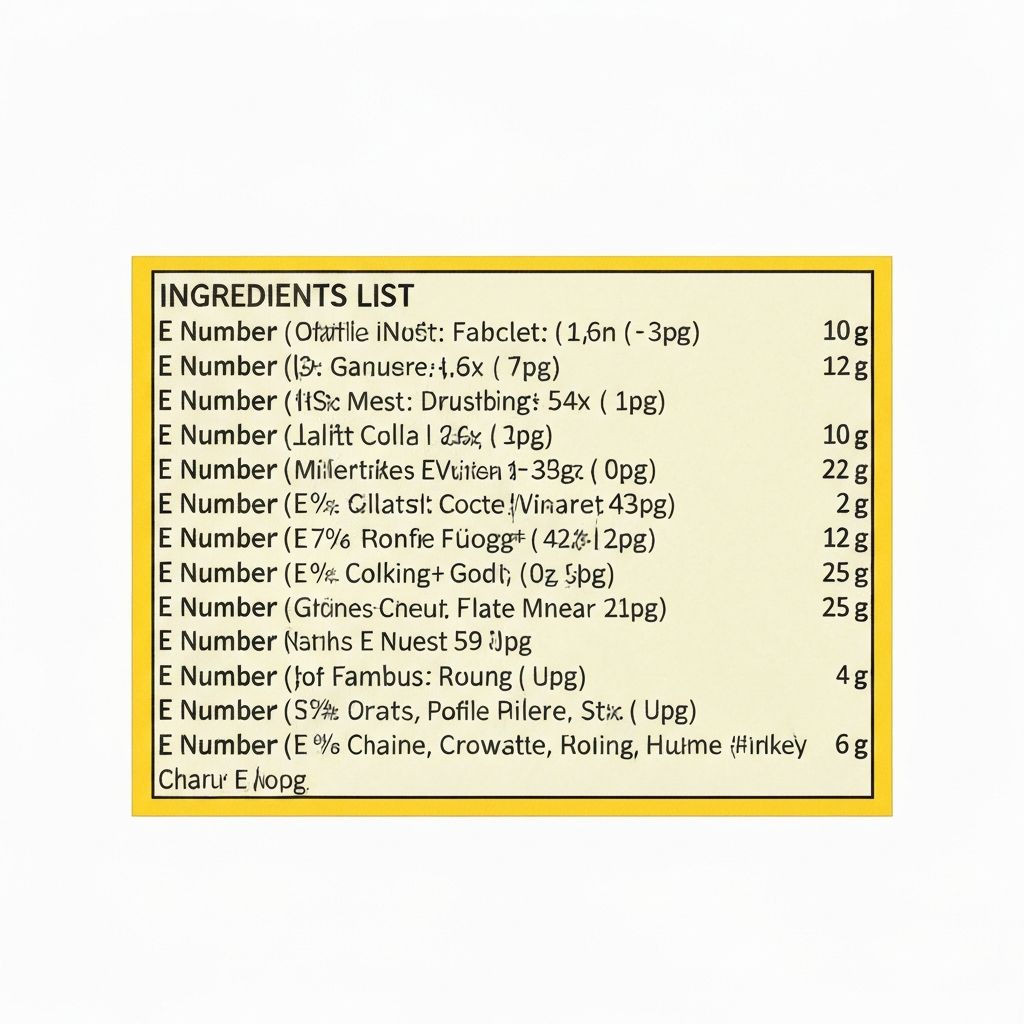
Ingredients List Order and What It Reveals
Why ingredients are listed by weight, how to identify additives and allergens, and what ingredient order means for product composition.
Learn more about →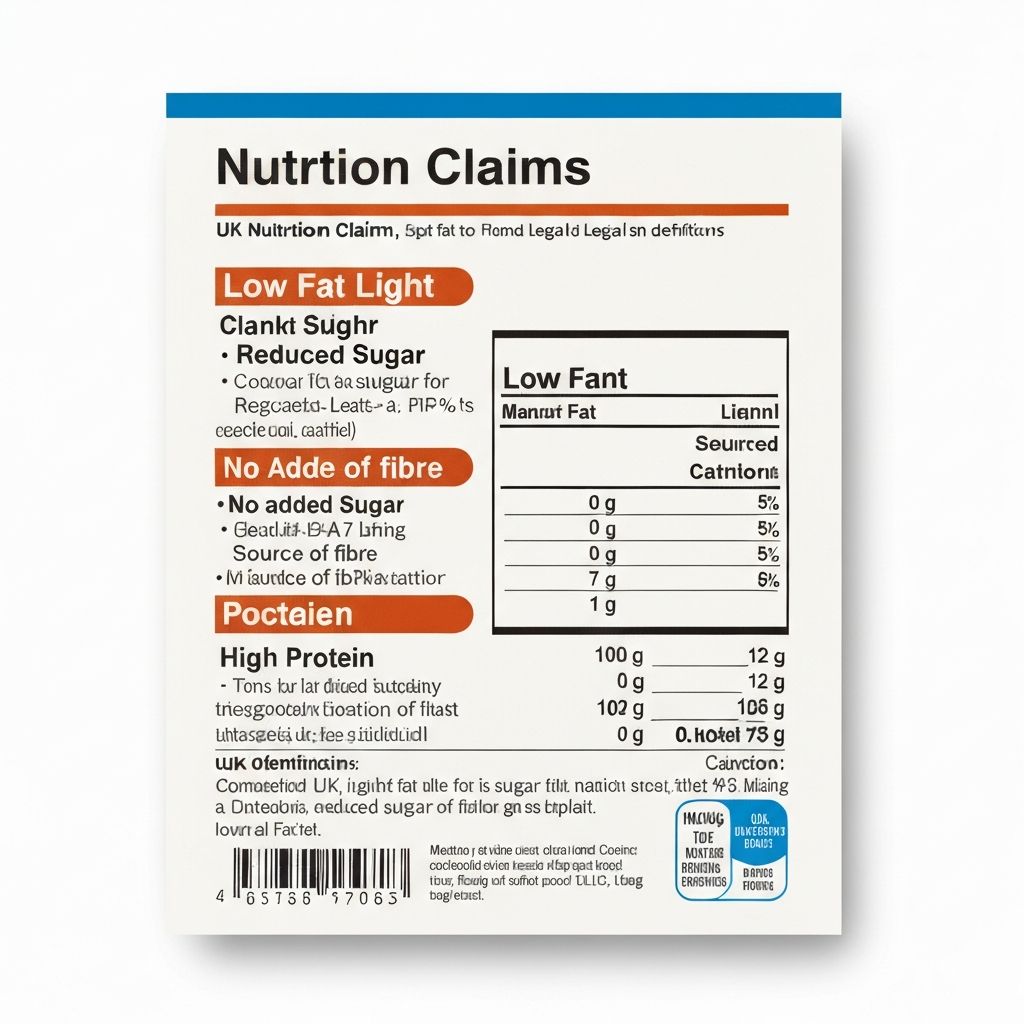
Legal Meaning of Common Nutrition and Health Claims
Definitions of claims such as low fat, light, reduced sugar, and source of fibre as specified in UK labelling regulations.
Learn more about →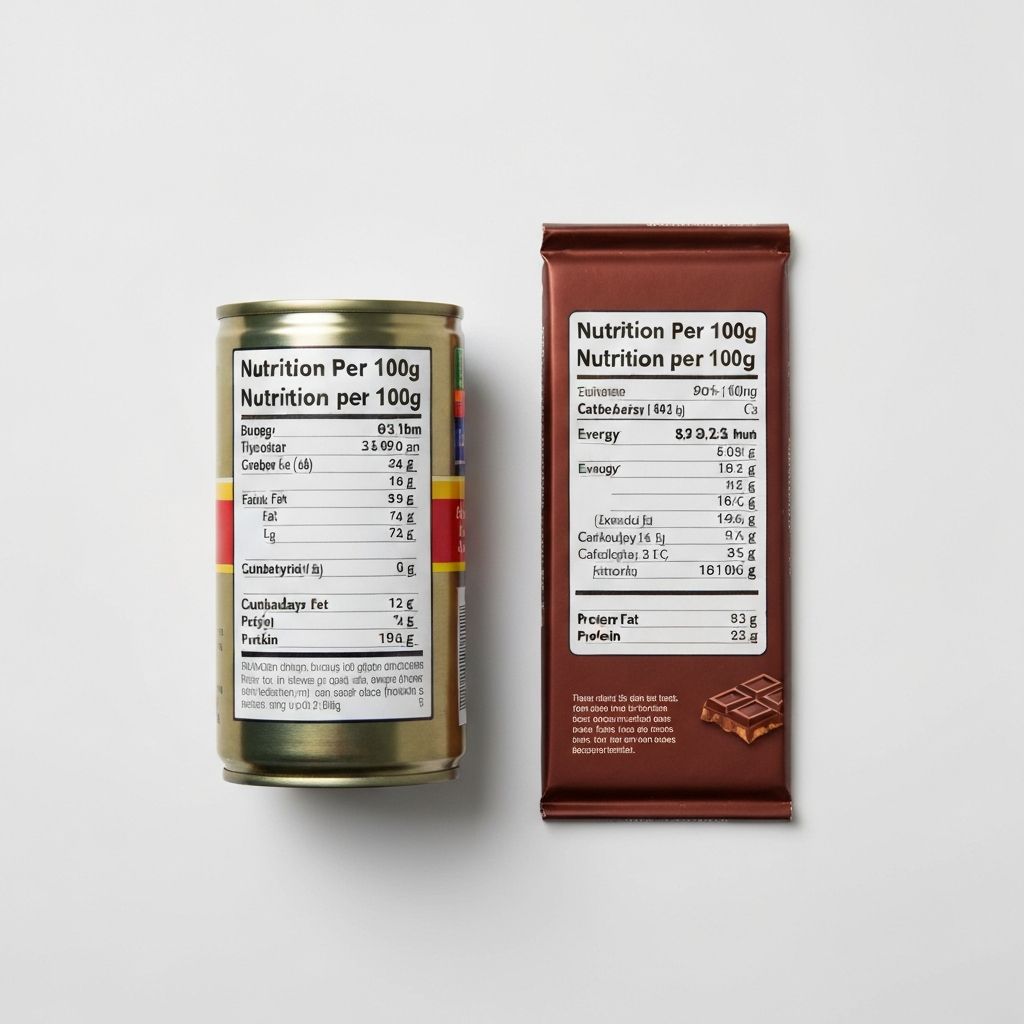
Comparing Products Using Per 100 g Values
How to use consistent units for fair product comparison and why per 100 g comparison is more reliable than per-portion values.
Learn more about →Frequently Asked Questions
Both kJ (kilojoules) and kcal (kilocalories) measure energy content in food. One kilocalorie equals approximately 4.184 kilojoules. UK food labels are required to display both units. Kcal is the more commonly used unit in everyday contexts in English-speaking countries, while kJ is also displayed to comply with international standards.
The per-portion value is calculated by multiplying the per 100 g value by the manufacturer's declared portion size divided by 100. For example, if a product contains 400 kcal per 100 g and the declared portion is 50 g, the per-portion value would be 200 kcal. The per-portion value depends entirely on the serving size declared by the manufacturer, which can vary between brands.
Green indicates the nutrient level is low per 100 g. Amber indicates the level is medium. Red indicates the level is high. The colour coding applies to fat, saturated fat, sugars, and salt. High, medium, and low are defined by standardised thresholds set in UK labelling regulations. The colours indicate only relative nutrient levels, not a judgement about the product.
No. Different manufacturers declare different portion sizes for similar products, making per-portion comparison unreliable. Use the per 100 g values instead, which are standardised units. This allows a fair comparison between any products in the same category, regardless of how the manufacturer has defined the serving size.
The low fat claim is defined in UK food labelling regulations as containing no more than 3 grams of fat per 100 grams of product (or 1.5 grams per 100 millilitres for liquids). For products naturally low in fat, the claim may be used if the product meets the definition. This is a legal definition that applies consistently across all manufacturers.
Ingredients are listed in descending order by weight at the time of manufacture. The ingredient present in the greatest amount appears first, and the ingredient present in the smallest amount appears last. This order applies to all ingredients and additives in the product, allowing consumers to identify the primary components and locate specific items like allergens.
E numbers are identification codes for approved food additives in the European Union and United Kingdom. E stands for Europe. Additives include preservatives, colourings, emulsifiers, and thickening agents. All approved E number additives have undergone safety assessment. The E number system provides a standardised labelling method that is consistent across countries.
The RI percentage indicates what proportion of an average adult's daily recommended intake is provided by one serving of the product. For example, if a product provides 25 percent RI for salt, one serving contains one quarter of the recommended daily amount for an average adult. RI percentages allow quick estimation of how a product fits into a daily diet.
Manufacturers may declare different portion sizes for the same product depending on package size. A multi-pack may list a smaller portion size, while a family-size package may list a larger portion. This is because the declared portion reflects the manufacturer's intended serving recommendation, which can vary by package. Per 100 g values will be identical between package sizes.
No added sugar means the product does not contain added sugars, though it may contain naturally occurring sugars or sugar alcohols. The claim indicates no sugars or sugar-containing ingredients were added during manufacturing. This differs from sugar-free, which generally means the product contains no more than 0.5 grams of sugars per 100 grams.
Some products, such as dried pasta or powdered beverages, display nutrition information for the product as sold (dry), while others display values for the prepared product (cooked or mixed with water). The label indicates which basis is used. Understanding whether the values are for the product as sold or as prepared is essential for accurate interpretation, as preparation can significantly change nutrient composition and portion sizes.
Nutrition information on labels provides factual data about product composition. Understanding this information allows you to compare products and see which nutrients are present in what quantities. However, individual dietary needs vary based on age, activity level, health status, and personal circumstances. For personalised dietary guidance appropriate to your situation, consult a qualified healthcare professional.
Continue exploring food information presentation
Discover detailed breakdowns of UK food labels, learn how to interpret label information, and understand the regulatory framework that shapes food labelling standards.
Explore labelling elements →Educational content only. No promises of outcomes.
The information on this site is provided for educational purposes to explain how UK food labelling systems work and how to interpret nutrition information presented on labels. This is not personalised dietary advice, nutritional guidance, or health recommendation. Individual dietary needs, health considerations, and food choices vary widely between people. The presentation and interpretation of label information does not imply any particular nutrition or health outcome. For personal dietary guidance appropriate to your individual circumstances and health status, consult a qualified healthcare professional.